
Clover Mite Exterminator in Omaha, Lincoln & Eastern Nebraska
Those tiny red bugs crawling across your windowsills and siding are almost certainly clover mites. RECON Pest Services provides clover mite control for homeowners in Omaha, Lincoln, and communities across eastern Nebraska, with treatments timed to the spring and fall migrations that send thousands of mites up sunny walls and through window frames.
Clover mites don’t bite, spread disease, or damage your home’s structure. But they arrive by the thousands, slip inside through the smallest gaps, and leave red stains on curtains, carpet, and paint when crushed. As your local clover mite exterminator in Omaha and beyond, our team treats the source outside your home so you aren’t vacuuming up the same problem every week.
What Are Clover Mites?
-
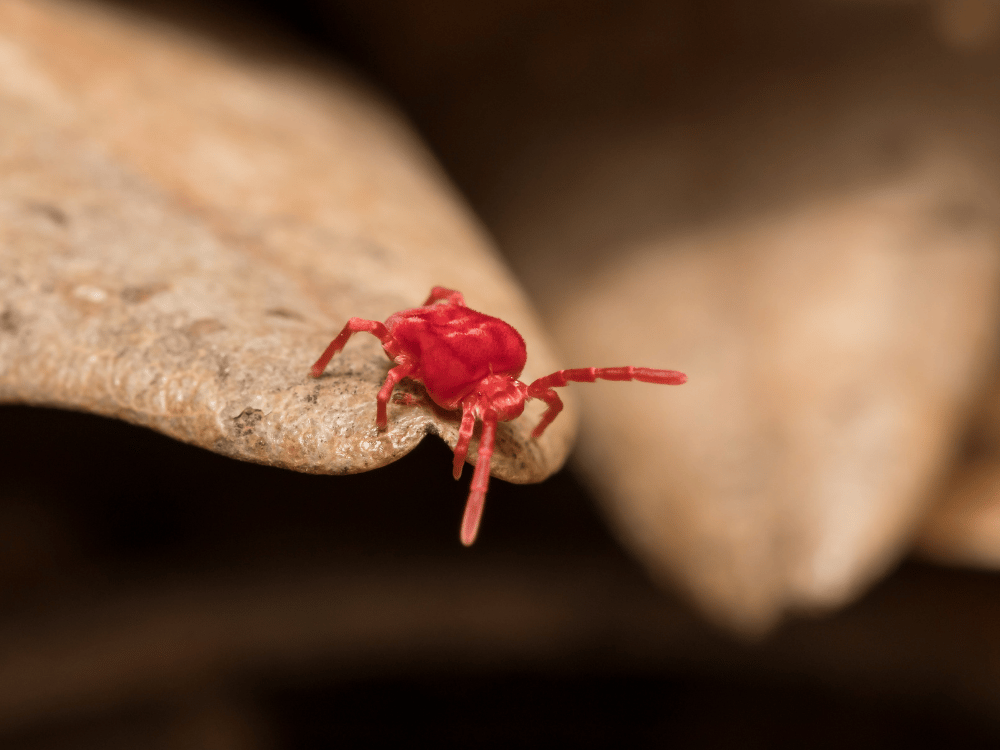
Clover mites (Bryobia praetiosa) are plant-feeding mites about the size of a pinhead, roughly 1/30 of an inch long. They range from reddish-brown to bright red, and their front pair of legs is noticeably longer than the rest, often mistaken for antennae. From a distance, a cluster of these tiny red bugs looks like red dust or moving pepper.
They feed on grass, clover, and ornamental plants, and nearly every clover mite is female. Because they reproduce without mating, a single mite can lay dozens of eggs in foundation cracks, under siding, and in tree bark. That’s why a clover mite infestation can seem to appear overnight when conditions are right.
Why Clover Mites Invade Nebraska Homes in Spring and Fall
Clover mites are cool-weather pests. They’re most active when temperatures sit between about 45 and 70 degrees, which puts peak activity for clover mites in Nebraska in early spring and again in fall. When summer heat arrives, adults stop moving and leave behind eggs that wait out the hot months.
Several conditions draw them straight to your house:
- Sun-warmed walls: South- and west-facing siding and windows heat up first, so mites cluster there in the largest numbers.
- Lush, fertilized lawns: Heavily fertilized turf that runs right up to the foundation supports larger populations.
- Foundation cracks and gaps: Mites use these spots to lay eggs and to slip indoors through window frames, door sweeps, and siding seams.
- New lawns: Fresh sod or newly seeded yards near the house often see heavier activity.
Many homeowners see clover mites on the same side of the house every year, often alongside other sun-seeking invaders like boxelder bugs and Asian lady beetles.
Clover Mites vs. Chiggers, Spider Mites, and Other Red Bugs
Several tiny red pests get confused with clover mites. Here’s how to tell them apart:
- Clover mites: Bright red to reddish-brown with long front legs. They gather on walls and windows in huge numbers, leave a red smear when crushed, and don’t bite.
- Chiggers: Live in tall grass and brush, not on your siding. Their larvae bite and cause itchy welts, which clover mites never do.
- Spider mites: Even smaller, feed on garden plants, and leave fine webbing on leaves. They rarely come indoors.
- Concrete mites: Fast-moving red mites that race across sidewalks and patios. They’re often mixed in with clover mites in spring and may occasionally nip.
Not sure what you’re seeing? Browse our pest library, or let one of our technicians identify it during your inspection.
How Our Clover Mite Exterminators Treat Your Home
Spraying the mites you can see only solves today’s problem. Our clover mite treatment targets where they live, breed, and get inside:
- Inspection: We confirm the species, find hot spots on sun-exposed walls, and check the lawn edge, landscaping, and foundation for egg-laying sites.
- Perimeter and foundation treatment: We apply a targeted barrier around the foundation, lower siding, and window frames where mites first reach your home.
- Lawn-edge treatment: We treat the turf and plantings along the foundation to reduce the breeding population closest to your house.
- Entry-point recommendations: We point out gaps around windows, doors, and siding that should be sealed to keep mites outside.
- Seasonal timing: We schedule treatments ahead of spring and fall activity so the barrier is in place before migrations peak.
Whether you need clover mite control in Lincoln, Omaha, or a nearby suburb, the process is the same. For year-round protection against clover mites and other seasonal invaders, ask about our pest control plans. Clover mites cover storefronts and office buildings too, and our commercial pest control team treats businesses with the same seasonal approach.
Clover Mite Prevention Tips for Omaha and Lincoln Homeowners
Good clover mite prevention starts with a few changes around your home:
- Create a plant-free strip: Keep an 18- to 24-inch band of bare soil, pea gravel, or rock between your lawn and foundation. Clover mites avoid crossing it.
- Go easy on fertilizer near the house: Over-fertilized turf supports bigger mite populations.
- Seal cracks and gaps: Caulk around windows, doors, and siding, and replace worn weatherstripping.
- Don’t crush mites indoors: Vacuum them or wipe them up with a damp cloth to avoid red stains.
These steps reduce pressure, but homes with a history of heavy invasions usually need a professional barrier to stay clear through both seasons.
Clover Mite Control FAQs
What are the tiny red bugs on my windowsill?
Those are most likely clover mites. They’re about the size of a pinhead, bright red to reddish-brown, and gather by the thousands on sunny windows and siding in spring and fall.
Do clover mites bite people or pets?
No. Clover mites don’t bite, sting, or spread disease. They feed only on plants, which makes them a nuisance pest rather than a health risk for your family or pets.
Can clover mites damage my house?
No. Clover mites don’t cause structural damage. The real problem is the red stains they leave on curtains, carpet, paint, and furniture when they’re crushed.
Why do clover mites leave red stains?
The red color comes from natural pigment in their bodies, not blood. Wipe stains right away with soap and water, and blot rather than rub so the color doesn’t spread.
When are clover mites most active in Nebraska?
Clover mites are most active in early spring and again in fall, when temperatures sit between roughly 45 and 70 degrees. Activity drops off in summer heat and winter cold.
How do I get rid of clover mites inside my house?
Vacuum them or wipe them up with a damp cloth instead of crushing them. Indoor mites usually die within a few days, but more will keep coming until the outdoor source is treated.
How long does clover mite treatment last?
A professional barrier treatment typically protects your home for 60 to 90 days, long enough to cover a full spring or fall migration when it’s timed correctly.
How do I keep clover mites from coming back?
Combine a plant-free strip along your foundation, sealed entry points, and a seasonal barrier treatment applied before spring and fall activity begins.
Professional Extermination Services
Why Choose RECON Pest Services
RECON knows Nebraska's pest patterns because we've been fighting local infestations for years. Our pest control company understands exactly when pests move and which areas they prefer, allowing us to target treatments for maximum effectiveness.
Our specialized treatments focus only on problem areas, not wasting time or resources on places pests ignore. This targeted approach means better results while minimizing chemical usage around your property.
Reviews
See what other companies have to say about our service. Read our customer reviews from businesses like yours.
Contact RECON Pest Services
Our targeted treatments remove these microscopic pests and create a barrier to prevent their seasonal invasions. Spring and fall protection available across Omaha, Lincoln and surrounding areas. Contact our pest control firm today to stop these nuisance invaders.
Blog
Stay informed about clover mite activity with seasonal updates from our Nebraska experts. Our blog helps you predict invasions and know when to take action.
Wasps in Nebraska – 5 Dangerous Pests to Avoid
Wasps can be a real nuisance for homeowners in Nebraska, and with several species buzzing around, it’s no...

How to Treat a Mosquito Bite On Your Eyelid & Treat Mosquitoes in Nebraska
Ouch! Why is my eye so itchy? A mosquito bite on your eyelid can feel like a major annoyance, but don’t...
Delayed Wasp Sting Reactions – Lincoln & Omaha Wasp Control
Ouch, was that a wasp? Have you ever been stung by a wasp and found yourself dealing with a delayed...